
If you’ve ever found yourself with an extra $1000 sitting in your bank account and wondered what to do with it, you’re not alone. In fact, one of the most searched questions in personal finance is exactly this, How to invest $1000. And 2025 might just be the perfect year to get started.
Why? Because the investing world is shifting fast. Stock markets are adjusting to interest rate cuts after a few years of relentless hikes. Cryptocurrencies are no longer the “wild west”, Bitcoin ETFs were approved and have attracted billions from institutional investors. Meanwhile, tokenized assets like U.S. Treasuries and real estate are starting to make their way into the hands of everyday investors. Translation: your $1000 has more doors to walk through than ever before.
The good news is you don’t need to be a Wall Street wizard to make smart choices. Investing is less about predicting the next Tesla or Bitcoin and more about creating a simple, balanced plan that matches your goals. Think of your money as employees. If you let them nap in a savings account, they’ll do very little. But if you assign them jobs, some building slow, steady growth in index funds, some exploring new frontiers like crypto, and maybe a few working safe shifts in bonds, they’ll actually get to work for you.
In this guide, we’ll explore practical and beginner-friendly ways to invest $1000 in 2025. We’ll break it into easy-to-read sections with examples and illustrations so you can see how real strategies look in action. Whether you’re cautious, curious, or aiming for high growth, you’ll walk away knowing exactly where that $1000 can go to start building wealth.
Step 1: Define Your Goals

Before you decide where to put your $1000, you need to ask yourself a very honest question, what am I investing for?
Investing without goals is like trying to drive somewhere without a map. Sure, you’ll move, but you might end up parked in the wrong driveway. Your financial goals will shape every decision you make.
For example:
- If your goal is long-term wealth (think retirement or financial independence), that $1000 is best placed into stable, growth-focused assets like ETFs, index funds, or even long-term bonds.
- If your goal is shorter-term experimentation (like testing out crypto or tech stocks), then you can afford to take on more risk since you’re treating it as a learning opportunity.
- If your goal is simply to save and grow a little cushion, then a high-yield savings account or money market fund might be your safest bet.
A fun way to think about it is like planning a vacation. If you’re heading to Hawaii, you pack shorts, sunscreen, and flip-flops. If you’re going skiing in Switzerland, you pack a jacket, gloves, and boots. Your $1000 “luggage” should match the destination, your financial goal.
The clearer you are about why you’re investing, the less likely you’ll panic when markets bounce around. Without goals, every dip feels like a disaster. With goals, dips just feel like pit stops on the way to your destination.
So step one in learning how to invest $1000 is deciding what you want your money to accomplish. Growth, safety, experimentation, or maybe a mix of all three. Once you know the purpose, building the plan becomes much easier.
Step 2: Explore Investment Options for 2025
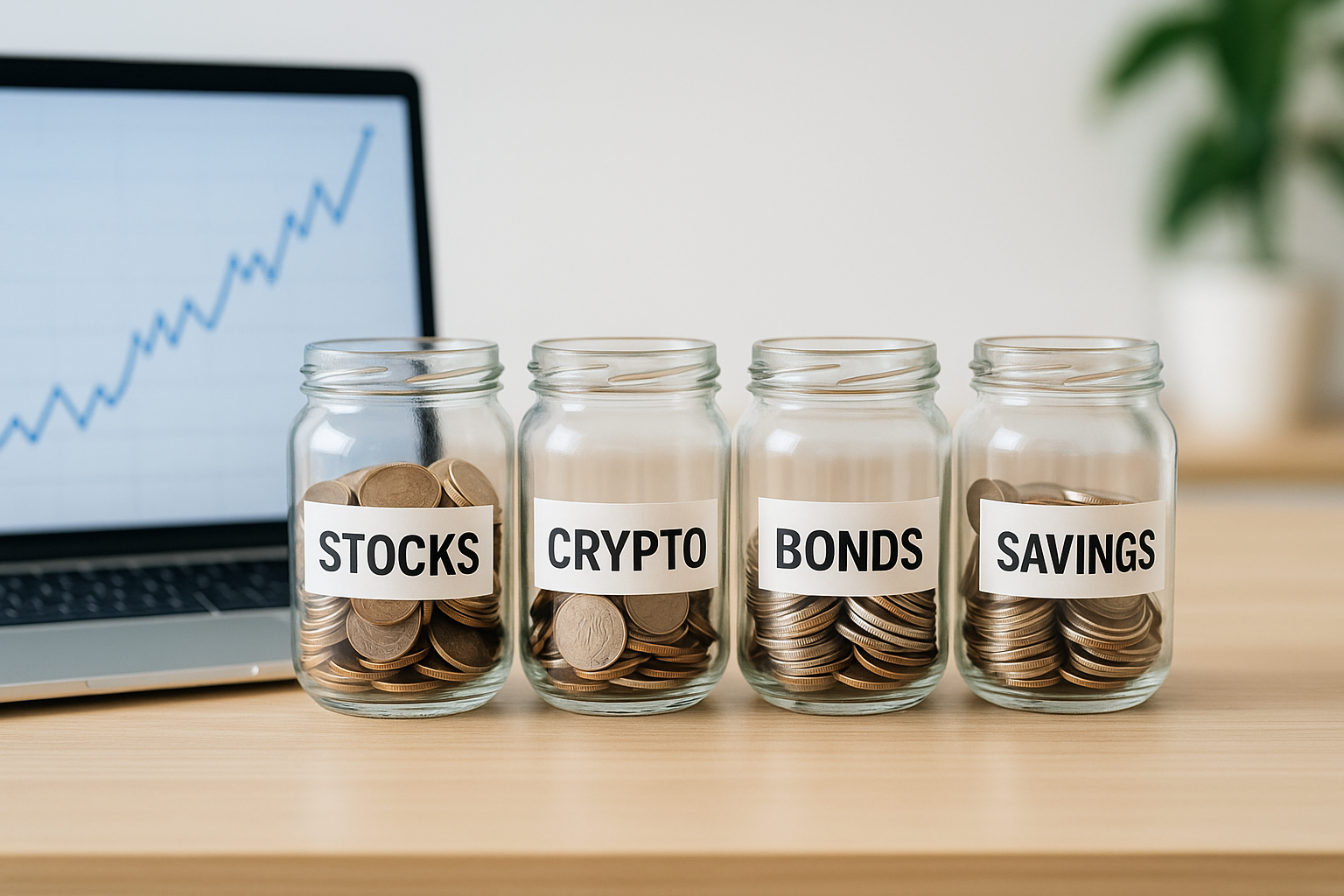
Now that you know your goals, let’s get into the fun part, deciding where to actually put that $1000. The beauty of investing in 2025 is that you don’t need to pick just one option. You can spread it across several categories and let them work together like a well-balanced team.
Here are the top five ways to invest your $1000 this year:
1. Stocks and ETFs
For beginners, stocks and exchange-traded funds (ETFs) are the bread and butter of investing. ETFs like the S&P 500 or Nasdaq 100 give you exposure to hundreds of companies at once, lowering risk compared to picking just one stock.
Example: Instead of buying one share of Tesla and hoping Elon behaves himself on Twitter, you could buy $500 of an S&P 500 ETF. This way, even if Tesla dips, you’ve got Apple, Microsoft, Amazon, and hundreds of others balancing things out.
2. Cryptocurrency
Crypto in 2025 isn’t the wild rollercoaster it used to be, but it’s still an exciting ride. With Bitcoin ETFs now trading, even cautious investors are getting exposure. Ethereum remains the backbone of decentralized finance, while altcoins like Solana and Chainlink are pushing innovation forward.
Pro Tip: Don’t throw all $1000 into crypto unless you’re aiming for high risk. A safer approach is allocating 10–20% of your portfolio here.
👉 Curious about timing your crypto buys? Check out our guide on Dollar-Cost Averaging. It’s one of the simplest and smartest ways to build wealth steadily.
3. Bonds and Fixed Income
Bonds used to sound boring, but in 2025 they’re making a comeback. With interest rates higher than they’ve been in years, U.S. Treasuries and high-yield savings products are finally paying attention-worthy returns.
You can also explore tokenized bonds, where blockchain tech makes them more accessible worldwide. It’s like giving an old-school investment a futuristic upgrade.
4. Alternative Assets
If you want to get creative, $1000 can also dip into alternatives like REITs (real estate investment trusts), gold ETFs, or even tokenized real estate. Some platforms let you invest fractional amounts in art, collectibles, and even farmland.
These won’t move as fast as stocks or crypto, but they give you valuable diversification.
5. High-Yield Savings and Cash Equivalents
Finally, not every dollar needs to go into riskier assets. Parking part of your $1000 in a high-yield savings account or money market fund can give you stability and liquidity.
Use our Savings & Investment Calculator to visualize how your money can grow over time. Adjust deposits, interest rates, and timelines to create a realistic saving plan that fits your financial goals. Perfect for testing easy saving strategies and long-term investment growth.
👉 For practical ways to save before you invest, read our guide on Easy Saving Strategies.
As Warren Buffett once said,
“Do not save what is left after spending, but spend what is left after saving.”
That mindset is timeless and applies perfectly to your first $1000 investment.
By diversifying across these five categories, you can take a balanced approach to learning how to invest $1000. It’s not about finding the “perfect” investment. It’s about building habits, spreading risk, and letting time and compounding do the heavy lifting.
Step 3: Building a Sample Portfolio ($1000 Breakdown)

So you’ve got your $1000, you’ve set your goals, and you know the main investment options. Now comes the fun part — actually dividing it up. The way you spread your money will depend on your risk tolerance and what you want that money to do for you.
Here are three sample portfolios to give you a clear picture.
Conservative Portfolio (Safety First)
- 60% Stocks/ETFs ($600)
- 20% Bonds/Treasuries ($200)
- 10% High-Yield Savings ($100)
- 10% Crypto ($100)
This approach prioritizes stability. Most of your $1000 works in broad ETFs and bonds, while a smaller slice gets exposure to crypto for growth potential. Great for first-time investors who want sleep-at-night security.
Balanced Portfolio (Mix of Growth and Stability)
- 40% Stocks/ETFs ($400)
- 20% Bonds/Treasuries ($200)
- 20% Crypto ($200)
- 20% Alternatives & Savings ($200)
This portfolio spreads risk evenly. You’ll get steady growth from ETFs, safety from bonds, excitement from crypto, and flexibility with alternatives like REITs or high-yield savings.
Aggressive Portfolio (High Growth Potential)
- 50% Crypto ($500)
- 30% Stocks/ETFs ($300)
- 20% Alternatives ($200)
This is for those who don’t mind volatility and want higher upside. Half your $1000 rides the crypto wave, while stocks and alternatives add diversification. If you’re new to investing, treat this like hot sauce — exciting, but you don’t want to overdo it.
Why This Matters
These breakdowns aren’t rules, they’re starting points. You can adjust based on your goals. The main idea is that diversification keeps your $1000 from being all-or-nothing. If crypto dips, your bonds and savings still hold value. If stocks soar, your portfolio grows even faster.
Remember, learning how to invest $1000 isn’t about chasing the “perfect” investment. It’s about creating a habit of allocating your money smartly. Once you see your first $1000 working for you, adding more becomes easier.
📌 Quick Tip
Pairing this step with Dollar-Cost Averaging can make your plan even stronger. Instead of investing all $1000 at once, you could split it into smaller chunks over a few months. For a full breakdown, check out our guide on Dollar-Cost Averaging.
Step 4: Risks to Watch in 2025

Every investment comes with some level of risk, even if you only put $1000 to work. Understanding these risks doesn’t mean you should avoid investing, it simply means you’ll be prepared. Think of it like driving a car, you wear a seatbelt not because you expect a crash, but because you know it’s possible.
Here are the big risks to keep an eye on in 2025:
1. Market Volatility
The stock market can move faster than a teenager’s mood. Inflation reports, interest rate changes, or global events can send prices soaring or sinking overnight. If you’re learning how to invest $1000, remember that sharp dips are part of the ride. The key is not to panic and sell at the worst possible time.
2. Regulatory Uncertainty
Crypto investors know this one all too well. While Bitcoin ETFs are now approved, many countries are still shaping their rules around digital assets. Sudden regulation could impact how accessible certain coins or platforms are. Staying updated and not overexposed in one area can reduce this risk.
3. Competition and Hype Cycles
Remember when everyone was convinced meme stocks would go “to the moon”? Trends can create massive short-term gains, but they can also fizzle out just as quickly. New AI companies, altcoins, or startups can look exciting but may not last. That’s why diversification is your best friend.
4. Interest Rate and Inflation Shifts
Even though rates are beginning to ease, 2025 is still unpredictable. Lower interest rates can boost stocks and crypto, but unexpected inflation could push central banks to act differently. If too much of your $1000 is in one type of asset, you could feel the swing more sharply.
5. Personal Discipline
Ironically, one of the biggest risks isn’t the market at all, it’s us. The temptation to sell too early, buy too late, or chase the “next big thing” can sabotage even the best plan. This is where strategies like Dollar-Cost Averaging can protect you from your own impulses.
“Risk comes from not knowing what you’re doing.” — Warren Buffett
By keeping these risks in mind, you won’t be blindsided when the market throws a curveball. Instead, you’ll treat it as part of the journey. Learning how to invest $1000 means understanding that risks aren’t there to scare you, they’re there to remind you to stay balanced, patient, and diversified.
Step 5: Rewards & Growth Potential

If Step 4 was the seatbelt, Step 5 is the open road. Yes, investing has risks, but the rewards are what make the ride worth it. Even a modest $1000 can unlock exciting opportunities in 2025 when put to work with patience and discipline.
1. Compounding Growth
This is where your money does magic tricks. A $1000 investment today, earning an average of 7% per year, could more than double in a decade, without you lifting a finger. The earlier you start, the more compounding becomes your best friend.
Example: Imagine putting $1000 into an ETF and adding just $50 a month. In 20 years, you could be staring at tens of thousands of dollars. Not bad for skipping a couple of takeout dinners.
2. Adoption of New Technologies
2025 is shaping up to be the year of tokenized assets, AI-driven funds, and mainstream crypto acceptance. Putting even a small portion of your $1000 into these innovations could expose you to industries with massive upside. Sure, not every project will be the next Bitcoin or Nvidia, but being early in transformative trends is part of the reward.
3. Diversification = Stability + Opportunity
Spreading your $1000 across multiple asset types means you can enjoy both stability and growth. Stocks and ETFs give you steady returns, bonds provide safety, while crypto and alternatives add excitement. It’s like building a meal plan, you want a mix of protein, veggies, and maybe some dessert.
4. Building Strong Financial Habits
The real reward of learning how to invest $1000 isn’t just financial, it’s psychological. Once you get comfortable investing, you’ll find it easier to save consistently, plan long-term, and avoid emotional decisions. It’s less about “Can I make money?” and more about “Can I build a system that keeps me on track?”
As Benjamin Franklin once said,
“An investment in knowledge pays the best interest.”
By putting your first $1000 to work, you’re not only earning returns, you’re gaining valuable experience that will compound right alongside your money.
Final Tips & Habits
By now, you know how to set goals, explore your options, build a portfolio, and understand the risks and rewards. But here’s the truth, the difference between successful investors and everyone else usually comes down to habits. Your first $1000 is less about hitting a jackpot and more about building the systems that keep you consistent.
Here are some simple but powerful tips:
1. Automate When You Can
Set up automatic transfers into your brokerage or savings account. When investing becomes part of your monthly routine, it removes the temptation to spend the money elsewhere. Automation is like having a personal trainer for your wallet, it keeps you disciplined even when motivation dips.
2. Avoid Constantly Checking Your Portfolio
Markets move daily, but your long-term goals don’t. Checking your portfolio every morning with your coffee is like weighing yourself after every snack, it won’t give you useful insight, and it will probably just stress you out. Instead, set a schedule, like once a month or once a quarter, to review and adjust.
3. Reinvest Your Returns
If your investments pay dividends, interest, or staking rewards, reinvest them. Compounding works best when you let your returns build on themselves. Reinvesting may feel like small change now, but over time it snowballs into something much bigger.
4. Keep Learning
Markets evolve, new opportunities appear, and economic conditions change. The more you educate yourself, the less likely you’ll be caught off guard. Check out other Atlas Capitol articles like Easy Saving Strategies to build your foundation, or our guide on Dollar-Cost Averaging for consistent investing approaches.
5. Patience is Everything
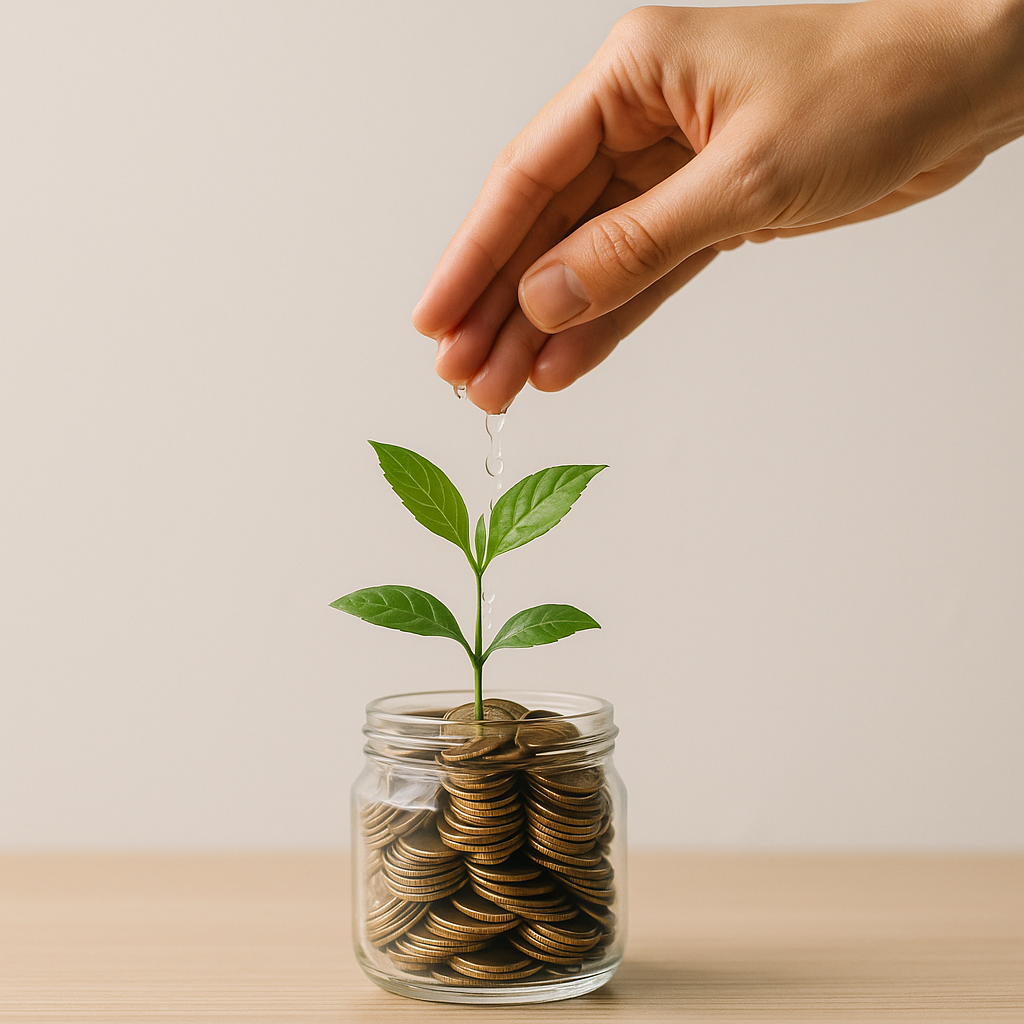
The most underrated investment skill isn’t timing the market, it’s staying in the market. Patience lets you ride out volatility, recover from dips, and actually benefit from compounding. Remember, investing is like planting a tree. You don’t dig it up every week to check the roots, you water it, let the sun do its work, and watch it grow.
“The stock market is a device for transferring money from the impatient to the patient.”
— Warren Buffett
By keeping your cool, sticking to habits, and focusing on the long game, your $1000 becomes the seed of a much larger financial future.
Final Summary & Closing Thoughts

You’ve just walked through a complete roadmap on how to invest $1000 in 2025. From setting your goals, to exploring your options, to balancing risks and rewards, you now have a practical playbook to put your first $1000 to work.
The truth is, this isn’t just about the money, it’s about building a mindset. That $1000 is your foundation, the seed that can grow into something much larger if you treat it with discipline and patience. Whether you chose the conservative, balanced, or aggressive sample portfolio, the real win is that you’re taking action.
Let’s quickly recap the key lessons:
- Define Your Goals: Know what you want your money to do. Safety, growth, or experimentation — each has its place.
- Explore Options: From stocks and ETFs to crypto, bonds, and alternatives, spreading your money across different assets lowers risk.
- Build a Portfolio: Sample allocations help you see how to divide your $1000 based on your risk tolerance.
- Understand Risks: Volatility, regulation, inflation, and even personal discipline can challenge you — but awareness is your best defense.
- Focus on Rewards: Compounding, new technologies, diversification, and better habits are the payoff for staying invested.
- Adopt Habits: Automate, reinvest, stay patient, and keep learning. Your consistency will matter more than your initial amount.
At the end of the day, the hardest part of investing isn’t the math, it’s starting. By taking your first $1000 and putting it to work, you’ve already beaten the hardest obstacle: hesitation.
One last bit of encouragement: investing isn’t about getting rich overnight, it’s about making small, smart decisions consistently. The world’s best investors didn’t win by luck, they won by showing up, year after year, and letting compounding do the heavy lifting.
As you move forward, keep exploring strategies, keep building your knowledge, and keep your eyes on the bigger picture. That $1000 is more than cash, it’s your ticket into the world of financial growth.
“The best time to plant a tree was 20 years ago. The second-best time is now.”
Chinese Proverb
So, if you’ve been wondering how to invest $1000, the answer is clear, start today, keep it simple, and let your future self thank you later.
Disclaimer
The information provided on this website is for educational and informational purposes only and should not be considered financial, investment, legal, or professional advice. Cryptocurrency, blockchain technologies, and financial markets are inherently volatile and carry significant risks of loss. Past performance does not guarantee future results, and any decisions based on the information presented are made at your own discretion and risk.
This website may include affiliate links, which means we may earn a commission if you choose to use these links to make a purchase or sign up for services. These commissions come at no additional cost to you and help support the content we create. However, we only recommend platforms and services that we believe are reputable and beneficial to our readers.
Always conduct your own research (DYOR) and consult with qualified professionals before making any financial, legal, or investment decisions. The content provided is intended as a resource, not as definitive advice.